My Photography (32) — A Curious Squirrel in Royal Łazienki Park, Warsaw, Poland, 2017

December 30, 2017 · 17:30

The squirrels in the Royal Łazienki Park in Warsaw are probably the most adorable creatures I have ever seen. Since it’s winter, they’re currently collecting as many nuts as they can, storing them for later by burying them in the ground, and only eating a few. If you happen to have a few with you (they love hazelnuts in particular), you’re in luck — they will literally eat out of your hand.

Shot with Sony A7R II + Zeiss ZF 100 mm f/2 Makro-Planer T*: f/2, 1/100 s, ISO 200.


Apple’s Message to Their Customers About iPhone Batteries and Performance →

December 29, 2017 · 11:15

We’ve been hearing feedback from our customers about the way we handle performance for iPhones with older batteries and how we have communicated that process. We know that some of you feel Apple has let you down. We apologize. There’s been a lot of misunderstanding about this issue, so we would like to clarify and let you know about some changes we’re making.

First and foremost, we have never — and would never — do anything to intentionally shorten the life of any Apple product, or degrade the user experience to drive customer upgrades. Our goal has always been to create products that our customers love, and making iPhones last as long as possible is an important part of that.

Now the important part…

About a year ago in iOS 10.2.1, we delivered a software update that improves power management during peak workloads to avoid unexpected shutdowns on iPhone 6, iPhone 6 Plus, iPhone 6s, iPhone 6s Plus, and iPhone SE. With the update, iOS dynamically manages the maximum performance of some system components when needed to prevent a shutdown. While these changes may go unnoticed, in some cases users may experience longer launch times for apps and other reductions in performance.

Customer response to iOS 10.2.1 was positive, as it successfully reduced the occurrence of unexpected shutdowns. We recently extended the same support for iPhone 7 and iPhone 7 Plus in iOS 11.2.

Of course, when a chemically aged battery is replaced with a new one, iPhone performance returns to normal when operated in standard conditions.

I mentioned that last bit a few days ago:

Fitting a new battery into an iPhone will allow the SoC to be used at full power once more, hence the issue will go away. You can either try to do this under warranty or pay less than 100 EUR / 100 USD to get it done in authorised service centres. You can find multiple examples of a new battery fixing the problem, here and here for example.

Apple is now lowering the prices of battery replacement however.

Apple is reducing the price of an out-of-warranty iPhone battery replacement by $50 — from $79 to $29 — for anyone with an iPhone 6 or later whose battery needs to be replaced, starting in late January and available worldwide through December 2018. Details will be provided soon on apple.com.

I hope this also means that they will refund those customers, who already replaced their batteries for this very reason.


The iMac Pro Is Amazingly Silent →

December 28, 2017 · 14:13

Jason Snell, writing for Six Colours:

When running HandBrake, the fan on my 5K iMac would always crank up and was quite audible when it did so. So far as I can tell, the iMac Pro’s fan may always be running, but it’s amazingly quiet. In my normal office environment, I can’t hear it—only when I spun the iMac Pro around and listened with all other devices off could I hear it, faintly blowing. When HandBrake was running at full speed, the iMac Pro sounded pretty much the same—but the air coming out of the vents on the back was definitely warmer!

I wonder how well the components inside that unnecessarily small case will fare from the heat over an extended period of time. This is my biggest iMac complaint — the back of the display could be both thicker and deeper, like the older iMacs. I’ll admit it looks good, but I’ll take cooler running internals over visual aesthetics every day of the week.


“Face ID Is a Mistake Disguised as Courage” →

December 28, 2017 · 12:39

Paul Thurrott’s piece on the iPhone X caught my eye because of his take on Apple’s design decisions:

Apple’s iPhone X is chock-full of new technologies and features, and it has a modern, elegant design that I feel will stand the test of time. But it is also more expensive than any other mainstream smartphone. And it has a few bad design choices that may limit its appeal.

My own complaints are mainly focused around iOS 11 itself, but I was curious on Paul’s take.

[…] some smartphones even offer more technically impressive designs. Samsung’s flagships offer displays that gracefully curve around the edges of the device, creating a truly bezel-less effect. And few phones stick an ungainly notch into the top of the display, ruining the infinity pool effect.

I spent a month with the S8 and S8+ — they are impressive — but if there was one thing I wish they didn’t have, it’s the curved glass. Terrible, terrible decision.

The notch is a problem. We must discuss the notch.

The notch is the wrong decision, and it’s one that Apple, and iPhone users, will now need to deal with for years. And it is the wrong decision on a number of levels.

From a looks perspective, the notch is an unnecessary, jarring interruption of an otherwise beautiful looking visual design. There is an elegance to the curves of the display and the surrounding frame, which match each other perfectly … except for that notch. It’s an affront. An intrusion. And despite assurances from some others I know who own the iPhone X—opinions differ on this one, apparently—you never really do get used to it. It’s like a mote in your eye, always in the way.

It is an affront, but at the same time, strangely enough, I barely notice it.

Apple should have done what Samsung did with its 2017 flagships, what OnePlus did with the 5T, and what virtually all other smartphone makers will do when they adopt this more design in other devices: Just put a bit of bezel at the top of the device. There is no need to intrude into the display.

I’m sure they considered this, but the iPhone would then look like every other phone on the market. My friend recently held up an LG V30 and even seeing it up close, I had to look for the logo — I thought it was the new Samsung set to ship in January.

But design is about more than just looks. Design also encompasses how a thing works. And notch or not, Apple needed some space at the top of the device to house the optical elements that were required for the iPhone X’s terrible Face ID technology.

Terrible? This will be interesting.

And Face ID is terrible by any meaningful metric. I’ll get into this more in the Security section of this review. But the short version is that this design is an unnecessary compromise and inconvenience. A rear-mounted fingerprint reader would have been hugely preferable. This is the iPhone X’s version of the missing headphone jack: A mistake disguised as courage.

Face ID has thus far, subjectively, surpassed all my expectations, beating Touch ID in every single “metric”. Which are the “meaningful” ones, I wonder?

It’s a shame that it needs to be protected with a case. Which it does, given its slippery and non-durable all-glass design.

Still rocking mine without a case1. It’s also notably less slippery than the iPhone 7 and 7 Plus.

To display the App Switcher, you swipe up from the bottom of the screen and hold.

You don’t need to hold. Just arc your gesture and the App Switcher will appear. This was a huge mistake on Apple’s part, when they demoed the iPhone X gestures during the keynote.

To access Control Center, you now swipe down from the top right of the screen. This is, of course, different from all other iOS-based devices, where you swipe up from the bottom of the screen to access this interface. But it’s easily learned.

This is the one gesture which is terrible beyond words.

Since Paul doesn’t mind, we obviously have completely different points of view.

The iPhone X display features HDR capabilities plus Apple’s excellent True Tone technologies, which subtly and dynamically color the display to match the light in your surroundings. This is the best implementation of this kind of thing I’ve ever seen—it debuted on the iPad Pro—and it makes reading, especially, delightful no matter where you are at the time.

Whenever I see a screen without True Tone now, I cringe. It’s that good.

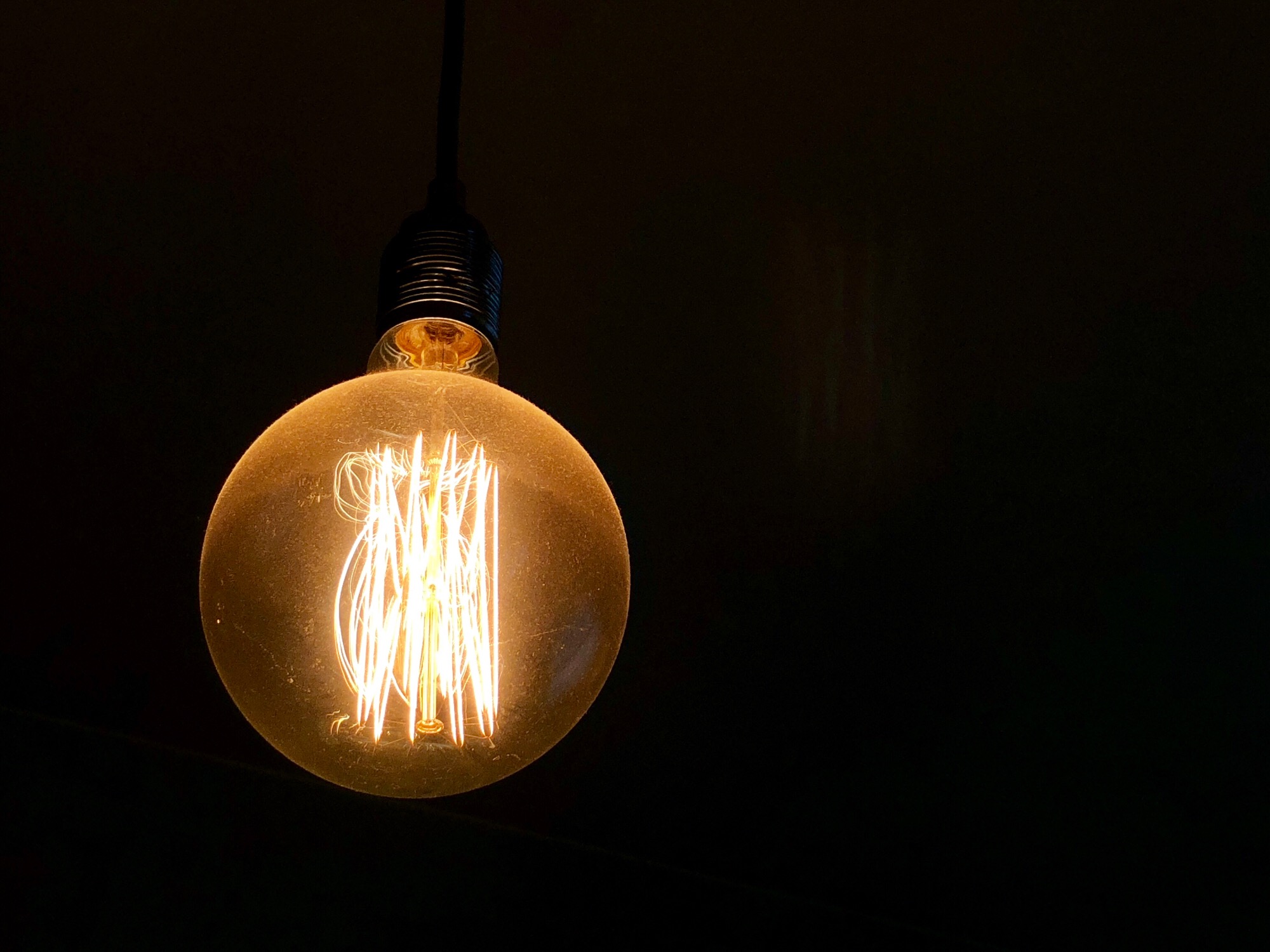
The problem with this approach is that great low-light cameras, like that in the Pixel 2 XL, actually use the darkness to great effect: Instead of lighting up the scene, they let you tap to focus on a lit area and create a much more attractive—and sometimes even surreal—photo in which colors and lights pop in the darkness. With the iPhone X, all you usually get is a scene that is as evenly lit as possible, given the conditions.

If Paul bothered to tap the screen, focusing on the light bulb in the iPhone shot, he would have gotten the same effect. Proof below.
Portrait Lighting only works with the selfie camera.

Nope. It works with the rear cameras too.

Apple’s use of facial recognition is inarguably the most controversial aspect of the iPhone X. It is also, I think, the iPhone X’s Achilles Heel.

Yes, Face ID works as good, if not better than, any facial recognition system I’ve used. But it’s not particularly fast or convenient when you factor in the time and effort it takes to actually sign-in: You also need to swipe up on the screen in order to actually access the home screen or whatever app you were previously using. It’s tedious.

Effort? What effort? I already have the phone in front of me — the rest is automatic.

I start swiping before the iPhone is in front of my face, in a position where I always hold smartphones. Face ID does the rest in the background. You don’t have to wait for Face ID to unlock before you start swiping.

Worse, it’s time-consuming: Face ID is not nearly as fast as using the Touch ID fingerprint sensor that Apple placed on previous iPhones. And in denying users that option—it could have, and should have, simply put Touch ID on the back of the iPhone X—it has created an all or nothing dilemma for customers. Face ID is easily the worst thing about the iPhone X. Easily.

It’s faster in the 48 days that I’ve used it, even more so when I take into account all the situations when Touch ID fails (multiple times per day). Face ID has failed me twice so far. Not bad. And it’s easily the best new feature of the iPhone X. Easily.

And you will need to use Face ID. To sign-in to your device, over and over again. To use Apple Pay. To approve purchases in the Store. Until of course, you can’t: For reasons I can’t quite explain, I’ve had to type in my Apple ID password—my freaking password, in 2017—more on the iPhone X than I have in years.

Once a Touch ID iPhone was unlocked, the user could get into almost everything, including signing into websites, whose passwords were stored in iCloud Keychain. Not so on the X. Before the iPhone X pastes in your login data, in Safari for example, it verifies that the user is still the owner of the phone. This additional security is priceless.

God, I miss Touch ID.

I don’t. And I can’t wait for Face ID on the iPad and Mac.

Video playback is problematic too, thanks to the notch. You have two choices: You can let the notch intrude into the video, as shown here.

Or you can crop it so that there are black bars on both sides. No, neither is ideal.

This is the result of going to taller that 16:9 screens, which Paul earlier calls “correct”:

Granted, other smartphone makers delivered what is now correctly viewed as the standard for modern flagships—tall, 18:9-ish displays with tiny bezels—well before Apple did with the iPhone X.

Come on Paul, every single taller or wider than 16:9, depending on orientation, screen is going to exhibit this behaviour.

There is no way around this: The iPhone X is expensive. Too expensive, I think.

I completely agree. To some, the price is justifiable, but not to most. I don’t consider the X to be worth the $1430 it costs in Poland. Not even close.

Compared to other flagships smartphones, the iPhone X is crazy-expensive. You can get an excellent Samsung Galaxy S8 or S8+ at a steep discount right now, and these devices feature even more impressive displays than Apple’s offering.

More impressive only considering it’s discounted to half the price of the X. If we remove the pricing factor, it is not superior.


I understand that these are Paul’s subjective views on the X, but I just cannot comprehend how he sees Face ID as the Xs biggest weakness.

  1. Touch wood.

Computer Latency: 1977-2017 →

December 26, 2017 · 15:35

Dan Luu:

I have this nagging feeling that the computers I use today feel slower than the computers I used as a kid. I don’t trust this kind of feeling because human perception has been shown to be unreliable in empirical studies, so I carried around a high-speed camera and measured the response latency of devices I’ve run into in the past few months. Here are the results […]

It’s a bit absurd that a modern gaming machine running at 4,000x the speed of an apple 2, with a CPU that has 500,000x as many transistors (with a GPU that has 2,000,000x as many transistors) can maybe manage the same latency as an apple 2 in very carefully coded applications if we have a monitor with nearly 3x the refresh rate […]

On the bright side, we’re arguably emerging from the latency dark ages and it’s now possible to assemble a computer or buy a tablet with latency that’s in the same range as you could get off-the-shelf in the 70s and 80s […]

The smartphone results that Dan posted put things in perspective.


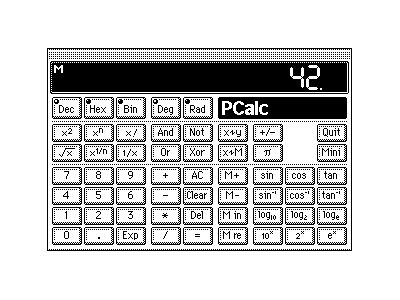
PCalc’s 25th Birthday →

December 23, 2017 · 07:48

James Thomson is currently celebrating the amazing history of his scientific calculator:

25 years sounds like a really long time. A quarter of a century sounds even longer. Yet, that is how long it has been since PCalc 1.0 was released […]

PCalc was my first ever application. I started writing in the summer of 1992 and it took me around six months to get it into a state where I was happy to show it to the world. Some of that code still runs today, deep at the heart of the machine.

That is both amazing and terrifying.

This means that both the iOS and Mac versions are on sale — down to $0.99 from the usual $9.99.

If you need a really good programmable calculator, do one of two things:

  • wait for the sale to end and buy it at full price (it’s totally worth it)
  • buy it now, go into the About screen, and drop a few coins into the Tip Jar

Wishing you as many more years of PCalc as you want James!

P.S. Don’t forget to play the AR game hidden in the About menu!


More Christmas App Store Deals — 22/12/2017

December 22, 2017 · 18:32

A few of my favourite games went on sale today, including Day of the Tentacle and Grim Fandango. Going through this list, I was quite surprised to learn that I have many of the apps listed below — I’d hate to see a tally of my purchases.

See all the deals→


Christmas App Store Deals — 21/12/2017

December 21, 2017 · 11:59

Since posting my deals list yesterday, many more apps have gone on sale, including the wonderful Mini Metro. I also completely forgot that Lucky Clan’s new Artstudio Pro (basically a Photoshop replacement), which launched last week, still has its promotional pricing (it will end soon). Oh, and if you still haven’t tried Alto’s Adventure, make sure to do so — it’s one of the best games of its kind.

  • Artstudio Pro – iOS
    $6.99
  • Artstudio Pro – Mac
    $23.99

See yesterday’s deals→


Apple Plans Combined iPhone, iPad & Mac Apps to Create One User Experience →

December 20, 2017 · 17:01

Mark Gurman, writing for Bloomberg:

The Mac App Store is a ghost town of limited selection and rarely updated programs. Now Apple plans to change that by giving people a way to use a single set of apps that work equally well across its family of devices: iPhones, iPads and Macs.

Starting as early as next year, software developers will be able to design a single application that works with a touchscreen or mouse and trackpad depending on whether it’s running on the iPhone and iPad operating system or on Mac hardware, according to people familiar with the matter.

If this is true, I’m guessing the road will be rocky for developers, but the benefit for users could be huge, especially those that use the same apps on both iOS and macOS, relying on iCloud or other services for the syncing of data. I do wonder how this will influence pricing, however.


Micro.blog Opens Up →

December 20, 2017 · 08:18

Manton Reece:

Micro.blog is now available to anyone. There’s a limit of 100 new sign-ups each day, so that we can better respond to feedback as the community grows. Thanks so much to the thousands of Kickstarter backers and new users who have helped us improve the platform this year.

This is what people should be using instead of Twitter and Instagram.


How to Restore an iMac Pro →

December 15, 2017 · 23:15

Apple Support:

In certain circumstances, such as a power failure during a macOS upgrade, an iMac Pro may become unresponsive and must be restored. The requirements for doing an iMac Pro restore are […]

You will need to have another Mac on hand to perform the restore.


Google Collects Android Users’ Locations Even When Location Services Are Disabled →

December 7, 2017 · 08:27

Keith Collins:

Since the beginning of 2017, Android phones have been collecting the addresses of nearby cellular towers—even when location services are disabled—and sending that data back to Google. The result is that Google, the unit of Alphabet behind Android, has access to data about individuals’ locations and their movements that go far beyond a reasonable consumer expectation of privacy.

Quartz observed the data collection occur and contacted Google, which confirmed the practice.

I wonder what would have happened had they not been caught, and I mean that with all the sarcasm in the world.

What scares me most is that people stopped caring about companies doing things like this. Sure, I care. Maybe even you care. But most people don’t.


Uber Paid Hackers to Delete Stolen Data on 57 Million People →

December 7, 2017 · 08:23

Eric Newcomer:

Hackers stole the personal data of 57 million customers and drivers from Uber Technologies Inc., a massive breach that the company concealed for more than a year. This week, the ride-hailing firm ousted its chief security officer and one of his deputies for their roles in keeping the hack under wraps, which included a $100,000 payment to the attackers.

Compromised data from the October 2016 attack included names, email addresses and phone numbers of 50 million Uber riders around the world, the company told Bloomberg on Tuesday. The personal information of about 7 million drivers was accessed as well, including some 600,000 U.S. driver’s license numbers. No Social Security numbers, credit card information, trip location details or other data were taken, Uber said.

I deleted my account a year ago or so — maybe more — and have not looked back. I refuse to do business with a company this evil, which tries to sweep all of its failures under the rug.


My Photography (30) — A Storm Behind Santuario di Santa Maria dell’Isola, Tropea, Italy, 2017

December 5, 2017 · 14:50

We spent these last few days in Italy, travelling between Lamezia Terme, Tropea, and Scilla — the surprisingly poor (for Italy) but beautiful region of Calabria. The weather wasn’t perfect, but we did get a few sunny days. I also finally had one of my dreams come true — to be right next to a storm, but just far enough to be out of the rain.

Setting up, I never thought I’d get the shot of the storm that started brewing during our dinner in one of the many small restaurants in the old part of Tropea… It’s not perfect, unfortunately — the bright light shining on the island itself is blown — but at the time I was certain there would be enough latitude in the RAW files, to save that part. I was wrong — lesson learned.

Shot with Sony A7R II + FE 28 mm f/2: f/4.5, 30 s, ISO 100.


The Rise and Fall of Security in iOS 11 →

December 2, 2017 · 15:34

Oleg Afonin:

The passcode. This is all that’s left of iOS security in iOS 11. If the attacker has your iPhone and your passcode is compromised, you lose your data; your passwords to third-party online accounts; your Apple ID password (and obviously the second authentication factor is not a problem). Finally, you lose access to all other Apple devices that are registered with your Apple ID; they can be wiped or locked remotely. All that, and more, just because of one passcode and stripped-down security in iOS 11.

This has been a very bad week or two for Apple.